
DiffScout vs Nani

DiffScout
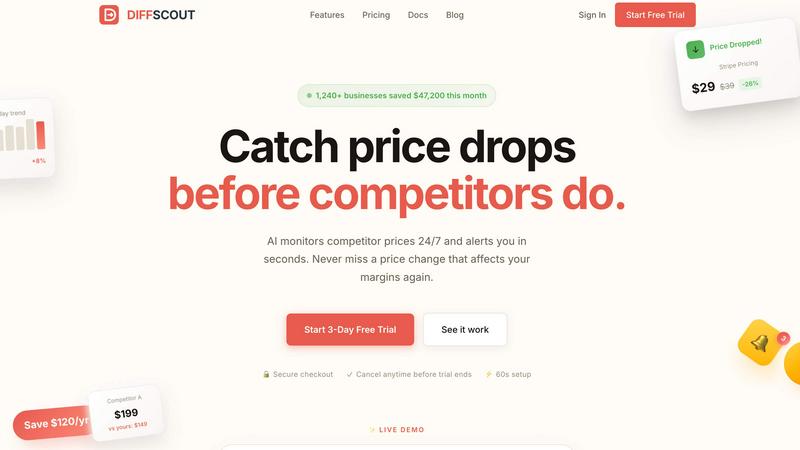
DiffScout instantly alerts you when competitors change prices so you can react first.
Last updated: February 28, 2026

Nani
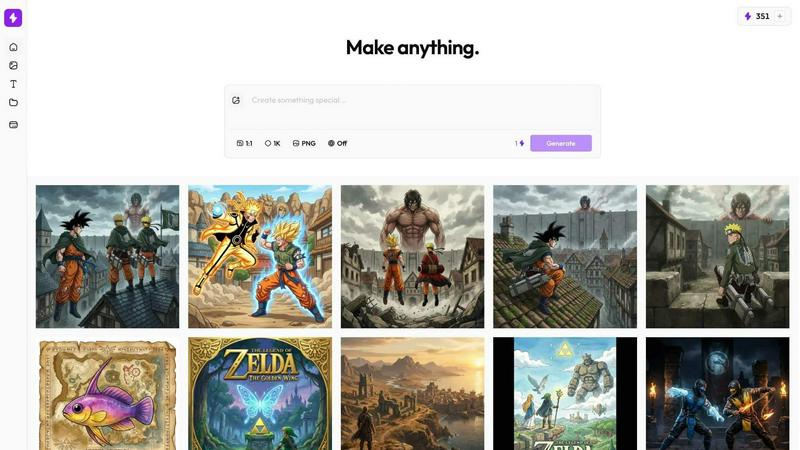
Nani supercharges your AI image generation with reusable prompts and powerful organization tools.
Last updated: February 28, 2026
Visual Comparison
DiffScout
Nani
Feature Comparison
DiffScout
AI-Powered Price Extraction
DiffScout's core intelligence lies in its advanced AI engine, specifically trained to identify and extract pricing data from even the most complex web pages. It effortlessly handles dynamic content rendered by JavaScript, complex pricing tables, and pages with bot protection. This means you simply paste a URL and describe what to track; there is no need for manual CSS selectors, XPaths, or any technical configuration. The AI does the heavy lifting of parsing the correct numbers, ensuring you track the actual price, not irrelevant page noise.
Lightning-Fast Alerts & Visual Trends
From the moment a competitor adjusts a price, DiffScout's system springs into action. You receive a detailed email alert in under 60 minutes, containing the precise old price, new price, percentage change, and a confidence score. Every alert is backed by a clear, visual 90-day price history graph directly in your dashboard. This allows you to instantly see if a change is a temporary flash sale or a sustained strategic shift, providing the context needed for an immediate, informed response.
Zero-Configuration, URL-First Monitoring
Forget about weeks of setup and complex product matching. DiffScout's philosophy is radical simplicity: if you can see the price in a browser, you can track it with DiffScout. There is no requirement to upload SKU catalogs or build product databases. You are live in 30 minutes by pasting URLs for your key competitor products across Shopify, Amazon, and direct brand sites into a single, unified platform. This URL-first approach eliminates the biggest barrier to entry for effective price monitoring.
D2C & Retail Native Tracking
Built specifically for the modern retail landscape, DiffScout offers native, out-of-the-box support for the platforms that matter most. It seamlessly tracks competitor Shopify storefronts, Amazon product detail pages (PDPs), and direct-to-consumer brand websites simultaneously. There are no per-channel add-ons or platform restrictions. This unified view means you can monitor your entire competitive field—from niche D2C brands to marketplace giants—in one centralized dashboard.
Nani
Composable Sets
This is the heart of Nani's power. Ditch the notepad full of fragmented prompts. Save complete style directions, character bios, and brand guidelines as reusable Prompt Sets. Upload your core reference images once as an Image Set. Then, for any new creation, simply combine these saved sets naturally—like mixing Lego blocks—to build complex, consistent prompts without retyping a single word. It turns prompt engineering from a chore into a strategic, scalable workflow.
Visual Iteration & Drag-Drop Reference
Break the tedious download-upload cycle forever. See a result you want to iterate on? Simply drag it directly from your generation feed back into the reference panel. This seamless visual loop allows for rapid refinement, style adjustment, and consistent evolution of your ideas. It’s a frictionless workflow that keeps you in a creative flow state, eliminating disruptive manual file management steps that plague other platforms.
Scalable Folder Organization
Your library isn't a feed; it's an archive. Nani gives you the tools to manage it like one. Create custom folders to organize projects, clients, or themes. Bulk-select images for moving, downloading, or deleting. Filter your entire collection to instantly surface favorited assets. As your portfolio grows into the thousands, Nani scales with you, ensuring you can always find what you need in seconds, not through endless scrolling.
Nano Banana Pro Supercharged
At its core, Nani leverages the formidable Google Nano Banana Pro model for stunning, high-fidelity image generation with customizable aspect ratios and resolutions. But Nani supercharges it by removing all the friction. Experience a fast, intuitive UI with no sluggish loading, generate images without any visible watermarks, and enjoy web search context included at no extra cost. You get raw power, polished for professional output.
Use Cases
DiffScout
E-commerce & D2C Competitor Monitoring
E-commerce and Direct-to-Consumer brands use DiffScout to maintain real-time awareness of their direct competitors' pricing strategies. By monitoring key product pages on rival Shopify stores and brand.com sites, teams can instantly react to price drops that threaten their market share or identify opportunities to adjust their own pricing for better competitiveness. This enables faster updates to ad copy, promotions, and sales strategies to defend margins and win customers.
SaaS Market Pricing Intelligence
SaaS companies leverage DiffScout to monitor the public pricing pages of competing software products. This provides crucial intelligence on new plan launches, feature-based price changes, and discounting strategies. Product and marketing teams use this data to inform their own pricing strategy, positioning, and sales conversations, ensuring they remain competitive and can articulate their value proposition effectively against market moves.
Procurement & Supplier Cost Tracking
Procurement and operations teams implement DiffScout to keep a vigilant eye on supplier and vendor catalog prices. By monitoring the product pages of key suppliers, they receive immediate alerts on cost increases, allowing for proactive budget adjustments and negotiation. Conversely, alerts on price drops can signal opportunities for cost savings and more favorable purchasing terms, directly impacting the bottom line.
Retail Arbitrage & Reselling
Retail arbitrageurs and resellers utilize DiffScout to identify profitable price discrepancies across different marketplaces and retailers. By tracking the price of the same product on Amazon, brand sites, and other marketplaces, they can be the first to know when a source's price drops, enabling them to purchase low and resell high. The rapid, sub-60-minute alerts are critical for capitalizing on these fleeting arbitrage windows before the market corrects.
Nani
Consistent Character & World Design
Concept artists and comic creators can define a character's appearance in an Image Set and their world's aesthetic in a Prompt Set. For every new scene, pose, or interaction, they combine these sets to generate perfectly consistent assets. This ensures the hero's costume, the city's architecture, and the lighting style remain coherent across hundreds of images, building a believable universe without constant manual oversight.
Brand-Aligned Marketing Content
Marketing teams can create a master "Brand Kit" Prompt Set containing official color palettes, tone of voice, and product descriptors, alongside an Image Set of logo files and product shots. Any team member can then generate social media graphics, ad concepts, or blog illustrations that are instantly on-brand. It democratizes creation while enforcing strict brand consistency at scale.
Rapid Product & Concept Iteration
Product designers can upload initial sketches or mood boards as an Image Set and save material/texture descriptions as a Prompt Set. They can then drag-drop generated concepts back as references to iterate on form, explore variations, and visualize different styles or materials in minutes. This accelerates the ideation phase from days to hours, enabling faster prototyping and decision-making.
Structured Content Creation for Creators
Digital creators and bloggers can maintain folders for different content series or topics. They can save a "YouTube Thumbnail Style" Prompt Set and reuse it for every video, or maintain an Image Set of their own face/avatar to insert into custom illustrations. This system turns the chaotic task of daily visual content creation into a streamlined, repeatable assembly line.
Overview
About DiffScout
DiffScout is the battle-tested price intelligence platform built for modern D2C, e-commerce, and SaaS teams who refuse to lose margin to silent competitor moves. It automates the tedious, error-prone process of manual price checking by continuously monitoring any competitor's pricing page and delivering actionable alerts within 60 minutes of a change. Simply paste a URL—whether it's a Shopify store, an Amazon listing, a complex brand.com product page, or a dynamic JavaScript-powered site—and DiffScout's AI takes over. It intelligently extracts and parses prices, tracks them over time, and notifies your team with precise before-and-after values, not just vague page-change screenshots. Unlike legacy tools that require cumbersome SKU matching and catalog uploads, DiffScout requires zero setup, no coding, and no developer resources. It provides clear, visual 90-day price histories and impact scoring, turning raw data into a strategic operating signal. For pricing managers, marketers, and procurement teams, DiffScout replaces guesswork and Monday-morning spreadsheet rituals with real-time, reliable intelligence, enabling faster, more confident pricing decisions to defend margins and capitalize on market opportunities.
About Nani
Forget the one-off, chaotic playgrounds that pass for AI image generators. They're built for novelty, not for the serious creator who needs to produce consistent, high-quality work day in and day out. Nani is the battle-tested workflow engine built on top of Google's powerful Nano Banana Pro (Gemini) model, engineered specifically to conquer the repetitive, disorganized grind of professional AI image generation. While other tools force you to rewrite prompts, re-upload references, and drown in a single endless feed, Nani brings military-grade organization and reusability to your creative process. It's for illustrators, concept artists, marketers, product designers, and content creators who demand more than just a random image—they demand a reliable, scalable production pipeline. Nani's core value proposition is simple: stop starting from scratch. By allowing you to save and combine Image Sets and Prompt Sets, it transforms isolated generations into a cohesive, evolving body of work, ensuring brand consistency, character fidelity, and stylistic coherence across every piece you create, all within a lightning-fast interface designed for speed, not distraction.
Frequently Asked Questions
DiffScout FAQ
What makes DiffScout different from general page change monitors like Visualping?
While tools like Visualping notify you that something on a webpage changed, DiffScout is purpose-built for price intelligence. It doesn't just send a screenshot diff; it tells you the exact price that moved, from what value to what new value, and with what percentage change. DiffScout's AI extracts the specific numerical price data, provides a confidence score, and delivers structured, actionable alerts that your team can act on immediately without interpretation.
Do I need to match products or upload a SKU catalog to use DiffScout?
Absolutely not. DiffScout eliminates the most painful part of traditional price monitoring. There is no product matching required. You do not need to upload any SKU catalogs or product databases. If you can copy and paste a URL to a live product page, you can monitor it with DiffScout. This URL-first approach gets you from sign-up to live monitoring in under 30 minutes.
Can DiffScout track prices on Amazon and Shopify?
Yes, natively and out-of-the-box. DiffScout is expertly engineered to track pricing on Amazon product detail pages (PDPs), Shopify storefronts, and direct brand websites. You can monitor all these channels simultaneously from a single DiffScout account without needing different tools or complex configurations for each platform.
How quickly will I get an alert after a price changes?
DiffScout is built for speed. From the moment a price change is detected on a monitored page, our system processes the diff and dispatches a detailed email alert to your team in under 60 minutes. This rapid turnaround time ensures you are among the first to know, giving you a critical advantage in responding to competitor moves before they impact your sales.
Nani FAQ
How is Nani different from other AI image generators like Midjourney or DALL-E?
Other platforms are primarily prompt boxes attached to a model—great for experimentation but chaotic for production. Nani is a full workflow layer built on top of Google's Nano Banana Pro. Our focus isn't just on generating a single image; it's on managing the process of generating dozens or hundreds of consistent images. Features like reusable Sets, folder organization, and drag-drop iteration are designed for repetitive, professional work, not just one-off curiosities.
What does "credits never expire" mean, and how does pricing work?
Nani uses a simple pay-as-you-go credit system with no subscriptions or monthly fees. You only pay for what you generate. Crucially, any credits you purchase never expire, so there's no pressure to "use it or lose it." Pricing is transparent at approximately 30 cents per high-quality generation (1K or 2K resolution). We even include web search context for your prompts at no extra cost, and all advanced workflow features are unlocked from day one.
Can I collaborate or share my work with others using Nani?
Absolutely. Nani supports a seamless workflow for sharing and collaboration. You can share any creation via a public link, allowing others to view your image. Furthermore, you can structure your Sets and prompts in a way that lets teammates or clients recreate and riff on your work within their own accounts, making it a powerful tool for team-based creative projects and client approvals.
Do I need a credit card to start using Nani?
No. You can start creating for free immediately without a credit card. We provide 5 free credits upon sign-up so you can fully experience the power of Nani's workflow features—including Sets, folders, and Nano Banana Pro generation—and see how it transforms your process before committing any funds.
Alternatives
DiffScout Alternatives
DiffScout is a price monitoring and change detection tool in the competitive intelligence and automation category. It automatically tracks pricing pages and alerts users to any changes, eliminating the need for manual checks. Users often explore alternatives for several reasons. They might be seeking a different pricing model, a specific feature like API access or deeper analytics, or a solution that integrates with their existing tech stack. Platform compatibility and the need for a more hands-on or technical setup can also drive the search for other options. When evaluating any alternative, key considerations should include its ability to handle complex, dynamic websites without manual configuration, the accuracy and speed of its change detection, and the depth of historical data provided. The ideal tool delivers reliable, actionable intelligence without creating extra work.
Nani Alternatives
Nani is a workflow-first AI image generation tool built on Google's Gemini model. It's designed for creators and professionals who need to produce consistent, on-brand visuals regularly, not just one-off experiments. The tool solves the repetitive chaos of managing prompts, references, and a growing library of generated images. Users often seek alternatives for various reasons. Cost is a major factor, as subscription tiers vary widely. Some may need a specific core model like DALL-E or Stable Diffusion, while others prioritize different features, such as advanced in-painting or animation. Platform needs also differ, with some users requiring a mobile app or a specific integration that Nani may not offer. When evaluating an alternative, look beyond raw image quality. Consider how the tool handles repetitive tasks. Does it have systems for reusing assets and prompts? How does it organize outputs? The true test is whether a tool saves you time on your tenth or hundredth generation, not just your first. A fast, organized workflow is often more valuable than a slightly more photorealistic one-off image.