
qtrl.ai vs Skene

qtrl.ai
qtrl.ai revolutionizes QA with seamless test management and AI-driven automation for faster, controlled quality.
Last updated: February 27, 2026

Skene
Skene replaces your legacy growth stack with code you own and prompt.
Last updated: February 28, 2026
Visual Comparison
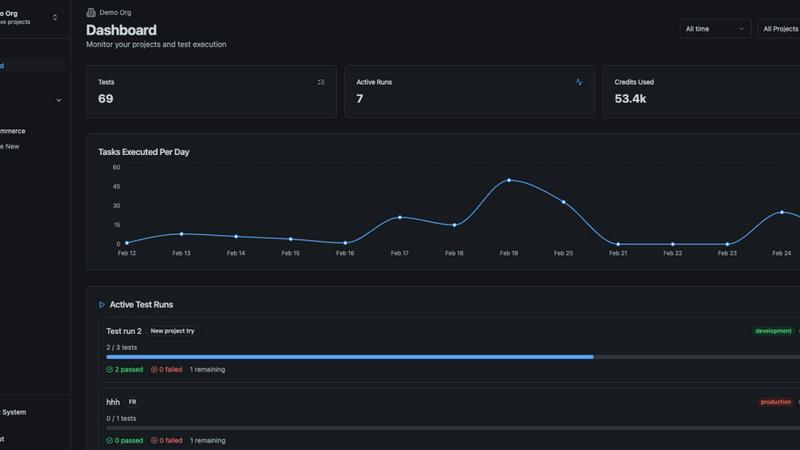
qtrl.ai
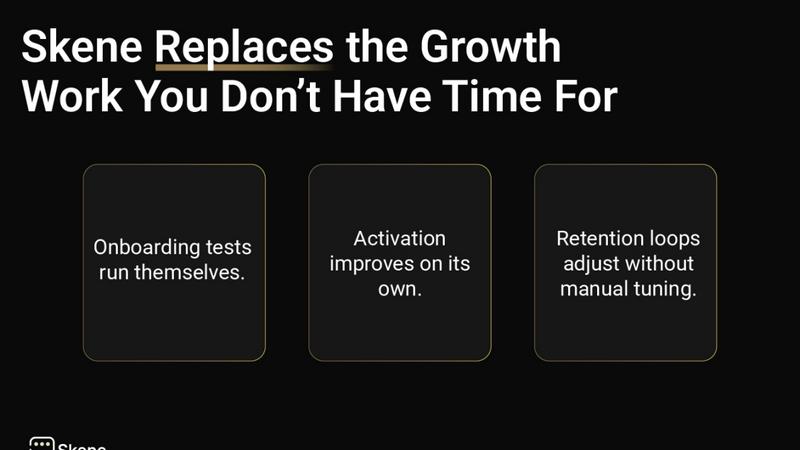
Skene
Feature Comparison
qtrl.ai
Autonomous QA Agents
qtrl.ai's autonomous QA agents can execute testing instructions on demand or continuously, ensuring that tests run efficiently across different environments at scale. These agents operate within predefined rules, providing real browser execution rather than relying on simulations, which enhances the accuracy and reliability of test outcomes.
Enterprise-Grade Test Management
The platform offers centralized management for test cases, plans, and runs, ensuring full traceability and audit trails. With support for both manual and automated workflows, qtrl.ai is built for compliance and auditability, making it an ideal choice for organizations that require stringent governance in their QA processes.
Progressive Automation
With qtrl.ai, teams can begin with human-written test instructions and gradually transition to AI-generated tests when they are ready. The platform intelligently suggests new tests based on coverage gaps, allowing teams to review, approve, and refine tests at every step, which promotes a culture of continuous improvement.
Adaptive Memory
qtrl.ai features an adaptive memory system that constructs a living knowledge base of the application. This capability allows the platform to learn from exploration, test execution, and issues, powering smarter, context-aware test generation that improves with every interaction, thereby enhancing overall testing efficiency.
Skene
Codebase-Derived Growth Signals
Skene doesn't rely on external tags or manual event tracking. It analyzes your repository structure directly to automatically detect growth signals, onboarding friction points, and activation opportunities. By reading your code, it builds a deep, contextual understanding of your user flows, ensuring that every optimization is perfectly aligned with your actual product architecture and not based on brittle UI selectors.
Prompt-Driven Growth Implementation
Stop managing dashboards full of knobs. With Skene, you design and run growth loops through simple prompts within your existing development environment. The platform generates a detailed growth manifest from your code analysis, allowing you or your AI agent to implement data-driven optimizations directly, turning strategic insights into shipped improvements with unprecedented speed.
Self-Optimizing User Flows
The platform autonomously handles the entire optimization cycle. It observes real user behavior, identifies drop-off and friction, then automatically creates, tests, and measures alternative flow configurations. The highest-impact version is deployed seamlessly. This creates a perpetual motion machine for growth where your onboarding improves itself and retention loops stay optimized with every code push.
Owned & Versioned Growth Infrastructure
Skene ends your dependency on external, performance-sapping scripts. Your growth logic is code you own, version, and control—just like the rest of your product. This eliminates the "black box," integrates seamlessly with your AI agents, and protects your data from siloed third-party dashboards, giving you full transparency and control over your growth engine.
Use Cases
qtrl.ai
Continuous Integration and Delivery (CI/CD)
For teams adopting CI/CD practices, qtrl.ai seamlessly integrates into existing workflows, allowing for real-time testing and quality feedback. This ensures that development cycles remain fast-paced without compromising on quality, ultimately leading to a more robust product.
Legacy Workflow Modernization
Organizations looking to modernize their legacy QA processes can leverage qtrl.ai to transition from outdated manual testing to a more sophisticated, automated approach. The platform supports gradual adoption, allowing teams to implement changes at a comfortable pace.
Compliance and Governance
For enterprises that require strict compliance and governance, qtrl.ai provides the necessary tools to maintain detailed audit trails and compliance records. This feature is crucial for regulated industries, ensuring that all testing processes meet industry standards.
Scaling QA Efforts
As companies grow, so do their testing needs. qtrl.ai allows QA teams to scale their efforts without losing control, providing a balance between speed and oversight. Teams can automate where it makes sense while retaining manual processes for complex scenarios.
Skene
Indie Developer Growth Automation
Solo founders and indie developers use Skene to offload the complex, time-consuming work of growth optimization they simply don't have hours for. It acts as an automated co-founder for growth, handling continuous analysis and testing of onboarding and activation flows, freeing the developer to focus purely on building the core product.
Startup "Growth Team in a Box"
Early-stage startups without dedicated growth teams deploy Skene as their foundational growth department. It provides the capabilities of a full-stack growth team—analytics, experimentation, and lifecycle automation—without the headcount. This allows startups to achieve sophisticated, data-driven growth from day one and scale their user base efficiently.
PLG Activation & LTV Expansion
Product-led growth companies use Skene to systematically tighten their activation funnel and expand customer lifetime value. By automatically identifying and smoothing friction points in the user journey, Skene drives more users to the "aha" moment faster and builds stronger, self-reinforcing retention loops, all without manual configuration.
Legacy Stack Replacement
Companies tired of managing a fragmented toolkit of analytics, onboarding, and A/B testing tools use Skene to replace their entire legacy stack. It consolidates multiple point solutions into a single, code-native engine that is more powerful, less brittle, and fully integrated into the development workflow, ending the chaos of context-switching between disparate platforms.
Overview
About qtrl.ai
qtrl.ai is a cutting-edge test management platform designed for enterprises that want to elevate their quality assurance (QA) processes. It empowers teams by providing tools to organize test cases, plan and execute test runs, and trace requirements to coverage while tracking quality metrics through real-time dashboards. The platform generates structured data from every test run, equipping engineering leads and QA managers with critical insights into testing results, pass rates, and risk areas. What sets qtrl.ai apart is its intelligent AI layer, which includes autonomous agents capable of generating UI tests from natural language descriptions and executing them across various environments and browsers. This progressive automation model allows teams to start with manual testing and gradually transition to AI-assisted automation, making qtrl.ai the ideal solution for organizations at any stage of QA maturity.
About Skene
Skene is a battle-tested, AI-powered PLG (Product-Led Growth) infrastructure that replaces the entire legacy growth stack. Forget about piecing together analytics dashboards, A/B testing tools, and brittle onboarding widgets. Skene is a fully automated, self-learning growth engine that connects directly to your codebase and IDE. It observes user actions to detect friction, automatically creates and tests improved user flows, measures impact, and deploys the winning configuration—all without manual intervention. This means your product's onboarding, activation, and retention loops continuously optimize themselves. Built for indie developers, early-stage startups, and scaling PLG companies, Skene is the definitive "growth team in a box." It allows you to offload growth work you don't have time for, tighten activation, and expand LTV without adding headcount. In a head-to-head comparison, Skene wins by turning growth into code you own and version, eliminating the performance drag and data silos of third-party snippets and black-box solutions.
Frequently Asked Questions
qtrl.ai FAQ
What types of organizations benefit the most from qtrl.ai?
qtrl.ai is particularly beneficial for product-led engineering teams, QA teams scaling beyond manual testing, companies modernizing legacy QA workflows, and enterprises that require stringent governance and traceability in their testing processes.
How does the AI layer enhance test automation?
The AI layer in qtrl.ai enables autonomous agents to generate UI tests from natural language descriptions, manage these tests as applications evolve, and execute them across various environments. This reduces the manual workload and increases testing efficiency.
Can qtrl.ai integrate with existing tools?
Yes, qtrl.ai is designed to work with your existing tools, facilitating requirements management integration and CI/CD pipeline support. This ensures a smooth transition to more advanced testing methods without disrupting current workflows.
How does qtrl.ai ensure data security?
qtrl.ai is built with enterprise-grade security protocols, including permissioned autonomy levels and full agent visibility. The platform is designed to keep sensitive information secure, ensuring that secrets are never exposed to AI agents during test execution.
Skene FAQ
How is Skene different from traditional customer experience software?
Traditional tools like walkthrough builders or analytics platforms require manual tour creation, constant maintenance, and rely on fragile UI overlays that break with every deploy. Skene is fundamentally different: it reads your actual codebase and automatically generates and updates onboarding, analytics, and automation. When you push code, your growth infrastructure updates itself—no manual intervention needed.
How long does it take to set up Skene?
Setup takes less than 60 seconds. You simply connect your GitHub or GitLab repository with read-only access. Skene automatically analyzes your codebase to generate PLG flows and a growth manifest. There are no initial code changes or API modifications required, allowing you to go from zero to a fully analyzed growth strategy in under a minute.
Is my source code secure with Skene?
Absolutely. Security is a core principle. Skene only ever requires read-only access to your repository. All analysis is performed in a secure, isolated environment. We never store your source code. Your growth logic becomes part of your own codebase, meaning you retain full ownership and control over all your intellectual property.
What kind of analytics does Skene provide?
Skene's dashboard provides real-time, actionable analytics focused on growth outcomes. Track user progress, completion rates, engagement metrics, and pinpoint exact bottlenecks. Measure critical metrics like time-to-value and directly attribute the impact of each automated experiment, giving you data-driven insights to fuel your product's evolution.
Alternatives
qtrl.ai Alternatives
qtrl.ai is a leading solution in the realm of QA test management and automation, designed to empower teams with the tools necessary to ensure software quality at scale. It offers enterprise-grade capabilities such as test case organization, test run execution, requirements tracing, and real-time quality metrics dashboards. Users often seek alternatives due to various reasons, including pricing concerns, specific feature requirements, or integration capabilities with existing platforms. When exploring alternatives, it's essential to consider factors such as the level of automation offered, ease of use, scalability, and the ability to adapt as your testing needs evolve. A solution that allows for gradual adoption of automation features can be particularly beneficial for organizations at different stages of their QA journey.
Skene Alternatives
Skene is a fully automated PLG iteration engine, a category-defining tool that acts as a self-learning growth engine for indie developers and early-stage startups. It automates the continuous optimization of onboarding, activation, and retention by understanding user behavior, eliminating the need for a dedicated growth team. Users often explore alternatives for several key reasons. Budget constraints can lead them to seek simpler, lower-cost tools, while others may require more manual control or specific integrations that Skene's automated approach doesn't provide. Some teams also look for platforms with a broader feature set beyond pure product-led growth automation. When evaluating an alternative, focus on core capabilities. The best options will offer robust analytics to pinpoint user friction, reliable A/B testing frameworks to validate improvements, and automation features that genuinely save time. Avoid tools that are merely dashboards full of knobs; seek a system that actively helps you implement and measure growth experiments.