Game Server Backend
Game Server Backend unifies player auth, data, leaderboards, and server hosting into one API so you ship multiplayer faster.

About Game Server Backend
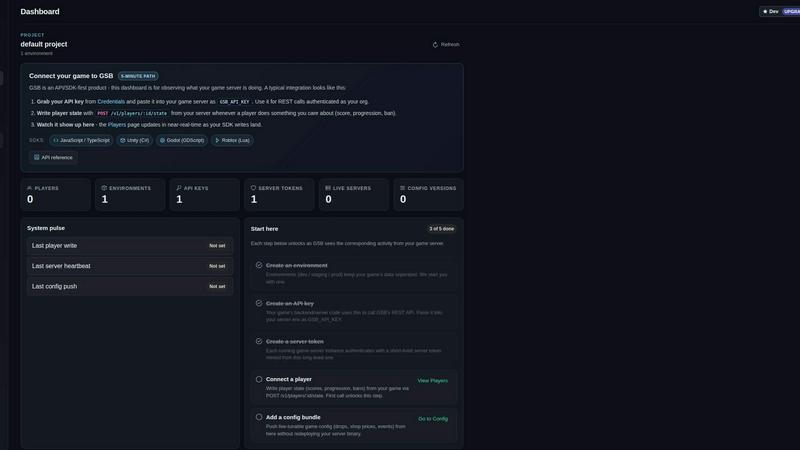
Game Server Backend (GSB) is a hosted backend platform built exclusively for studios and indie developers creating multiplayer games. It delivers the entire operational infrastructure a multiplayer title needs behind a single, unified API, allowing teams to ship their games without spending months rebuilding backend services from scratch. GSB bundles player authentication, persistent JSON state, global and regional leaderboards, a dedicated server registry for community-server discovery, in-game economy primitives, matchmaking, and a live-ops configuration layer that enables gameplay tuning without requiring a client patch. The platform supports three authentication paths out of the box: anonymous accounts that can upgrade later, passwordless email sign-in, and Steam OpenID for PC titles. Drop-in SDKs ship for Unity, Unreal Engine, and Godot, each wrapping the underlying REST layer in idiomatic, type-safe APIs that integrate seamlessly with existing engine patterns. GSB is designed for teams who are tired of stitching together separate vendors for auth, persistence, rankings, config rollout, and server discovery. Instead of managing five different tools that drift apart over time, you get one platform that covers the runtime needs of live multiplayer games. The dashboard is built to observe a running game, not a generic app, with player writes, server heartbeats, config pushes, and SDK quickstarts all visible at a glance. Workspaces and environments keep staging and production separate by design, so you can go from prototype to live without the backend becoming the bottleneck that slows down shipping.
Features of Game Server Backend
Player Authentication
Support multiple authentication methods including email and password, guest sessions, OAuth providers like Google, GitHub, and Discord, and Roblox verification. This allows you to handle real accounts, onboarding flows, and authenticated player access without building authentication infrastructure from scratch. Players can start with anonymous sessions and upgrade to full accounts later, reducing friction during initial gameplay.
Persistent Player Data
Store player-scoped and project-scoped JSON documents for progression, profiles, unlocks, event flags, inventories, and shared runtime values. The system is server-authoritative with patch semantics, meaning you can update specific fields without overwriting entire documents. This gives you fine-grained control over player state while maintaining data integrity and preventing client-side tampering.
Leaderboards
Ranked and seasonal boards with configurable rules, fast ranking reads, recurring resets, and support for timed events or score-based loops. Anti-cheat friction is built into write operations, so you can trust the integrity of your competitive rankings. Global and regional scopes allow you to segment leaderboards by geography or game mode, giving players relevant comparisons.
Dedicated Server Registry
Register, heartbeat, and search dedicated servers to power server browsers, active session discovery, region-aware listings, and stale cleanup. This feature enables community-server discovery and allows players to find active game sessions near them. The registry automatically handles stale server removal, keeping your server list accurate without manual intervention.
Live Config Delivery
Upload versioned configuration bundles and activate them per environment so balance changes, rotations, loot tables, and rulesets ship without a full client patch. This live-ops capability lets you tune gameplay parameters in real time, respond to player feedback quickly, and run seasonal events without forcing players to download updates.
Matchmaking
Tickets, rulesets, region-aware allocation, and admin tooling for forced forms and queue management. Wire matchmaking to your own dedicated servers or a reserved-server pool. The system handles player grouping, skill-based matching, and latency optimization so you can deliver fair, responsive multiplayer experiences.
Economy
Currencies, virtual items, and inventories with atomic updates for rewards, sinks, consumables, and grants. Every transaction is audited server-side, preventing duplication exploits and ensuring economic integrity. This gives you a complete in-game economy system without building your own transaction processing layer.
Use Cases of Game Server Backend
Indie Multiplayer Game Launch
An indie studio building a competitive multiplayer shooter uses GSB to handle player authentication, leaderboards, and dedicated server registration. They wire matchmaking to their own server pool, use live config delivery to tune weapon balance weekly, and store player progression in persistent JSON documents. The single API eliminates the need to integrate five different services, cutting their backend development time from months to days.
Seasonal Live Operations
A mid-size studio running a live service game uses GSB's leaderboards with recurring resets to power seasonal rankings and timed events. They push new loot tables and rulesets via live config delivery without client patches, keeping the game fresh for players. The economy system handles seasonal currency grants and consumable rewards, all audited server-side to prevent exploits during high-traffic events.
Community Server Discovery
A game with player-hosted dedicated servers uses GSB's server registry to power its server browser. Players register their servers with heartbeats, and the registry provides region-aware listings so players can find low-latency sessions. Stale cleanup automatically removes offline servers, and the search API allows filtering by game mode, player count, and region.
Cross-Platform Prototype to Production
A small team prototyping a new multiplayer concept uses GSB's anonymous authentication to let players jump in immediately. As the game gains traction, they upgrade accounts to persistent profiles with email sign-in. The environment-aware design lets them run staging and production separately, and the SDKs for Unity, Godot, and Unreal ensure the backend works with whatever engine they choose for final development.
Frequently Asked Questions
How does Game Server Backend compare to building custom backend services?
Building custom backend services for multiplayer games typically requires months of development for authentication, leaderboards, player data storage, server discovery, and matchmaking. GSB delivers all these features behind one API with drop-in SDKs, reducing backend development time to days. You avoid the operational overhead of managing separate databases, authentication servers, and deployment pipelines, and you get battle-tested infrastructure that scales with your player base.
What authentication methods are supported out of the box?
GSB supports three authentication paths: anonymous accounts that can upgrade to persistent accounts later, passwordless email sign-in for frictionless onboarding, and Steam OpenID for PC titles. Additionally, OAuth providers including Google, GitHub, and Discord are available, along with Roblox verification. This range covers everything from quick prototype access to full account systems for shipped titles.
Which game engines are supported by the SDKs?
Drop-in SDKs ship for Unity, Unreal Engine, and Godot. Each SDK wraps the underlying REST layer in idiomatic, type-safe APIs that integrate with existing engine patterns without ceremony. This means you can use familiar engine workflows like Blueprints in Unreal or C# scripts in Unity without learning a new paradigm. Custom game servers can also connect directly via the REST API.
Is there a free tier and what does it include?
The Dev plan is free forever with no credit card required. It includes access to all core services including player authentication, persistent player data, leaderboards, economy, dedicated server registry, live config delivery, matchmaking, and social features. This allows you to prototype and develop your game without any upfront investment, then scale to production plans as your player base grows.
Top Alternatives to Game Server Backend

BulkPicTools
BulkPicTools lets you compress, convert, and crop 200+ images locally in one session without ever uploading a file.
Nick Launches
Builders get a permanent backlink and thousands of eyes, not just a launch that disappears.
Headless Domains
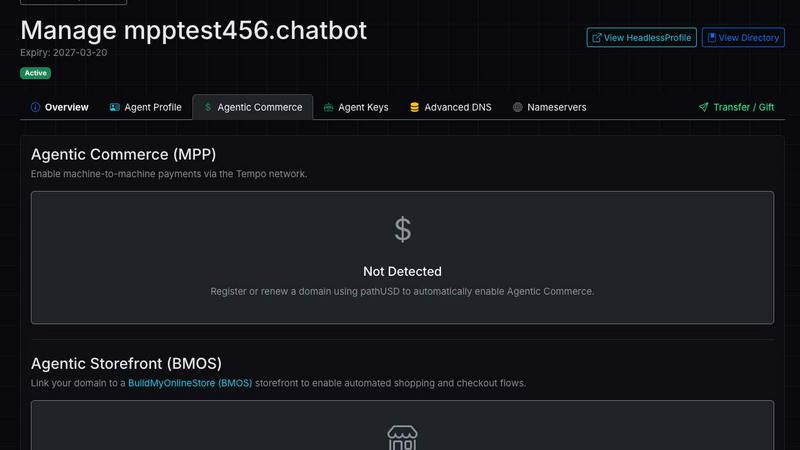
Headless Domains is the definitive identity standard giving AI agents portable, verifiable identities to prove trust across any app or marketplace.